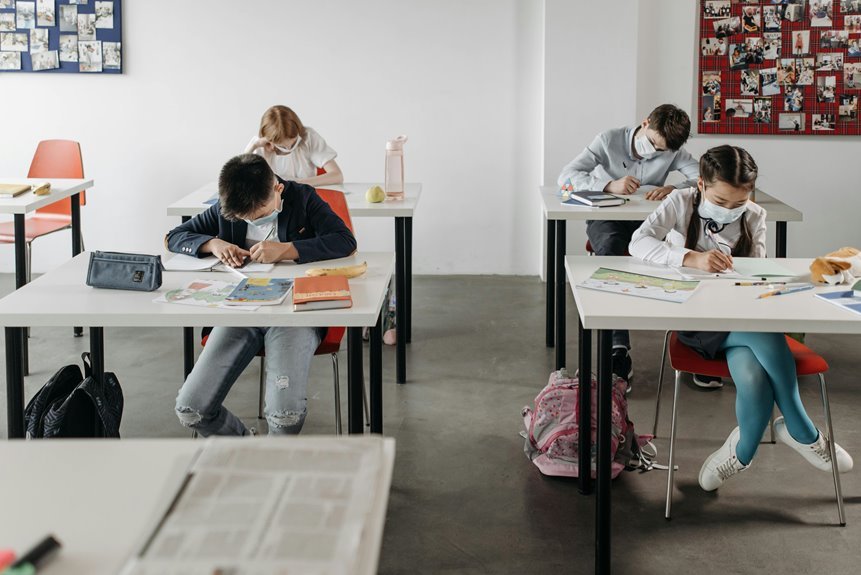
Imagine a world where every child, regardless of background, steps confidently into a classroom filled with opportunity. Article 45 outlines the state’s commitment to providing free education for children up to 14, aiming for inclusivity and equity. Yet, this policy faces significant challenges, from accessibility to funding. Understanding these complexities is crucial as we explore how Article 45 shapes the educational landscape and impacts society’s future.
Overview of Article 45
Article 45 of the Indian Constitution emphasizes the state’s responsibility to provide free and compulsory education for all children up to the age of 14.
This provision is crucial for fostering child development and ensuring educational equity.
Objectives of Child Education Policy
Building on the foundation laid by Article 45, the objectives of the Child Education Policy focus on ensuring that every child receives quality education that promotes holistic development.
This includes fostering educational equity, so all children, regardless of background, can thrive.
Challenges Addressed by Article 45
While striving for quality education, Article 45 directly addresses several significant challenges that hinder effective learning for children.
It tackles accessibility issues, ensuring that every child can attend school, regardless of their background.
Additionally, it confronts funding challenges, advocating for adequate financial resources to maintain and improve educational institutions.
Implications for the Future of Education
As educational policies evolve, the implications for the future of education become increasingly significant.
You’ll notice future trends shifting towards personalized learning and technology integration, driven by ongoing educational reforms.
These changes aim to foster critical thinking, creativity, and adaptability.
Embracing these implications can empower you to navigate an ever-changing educational landscape, ensuring a more inclusive and effective learning environment for all.
Conclusion
In an ideal world, Article 45’s promise of free education for all kids would be as easy to achieve as pie in the sky. But let’s face it—funding woes and accessibility hurdles often turn this noble goal into a game of hopscotch. While we dream of a future where every child learns without barriers, we’re left juggling policies and budgets. So, let’s hope that, one day, these lofty ideals become more than just words on paper, but rather, a reality we can all embrace.