Article 358 of the Indian Constitution raises important questions about the balance between national security and individual rights. When a national emergency is declared, certain fundamental rights can be suspended, allowing the government to act swiftly. However, this power isn’t without its risks. As you explore the historical context and implications of this article, consider how such measures can impact democratic principles during crises. What safeguards are in place to protect civil liberties in these situations?
Historical Context of Article 358
While many recognize Article 358 as a crucial component of India’s constitutional framework, its historical context reveals a complex interplay of political necessity and civil liberties.
The article’s historical significance lies in its legislative intent to balance state security with individual freedoms, reflecting a response to tumultuous times.
Understanding this context helps you appreciate the tensions inherent in emergency governance and civil rights protection.
Mechanism of Suspension of Fundamental Rights
The mechanism for suspending fundamental rights under Article 358 is intricately designed to enable the government to respond swiftly to threats against national security.
Suspension procedures are activated during a proclaimed emergency, allowing the state to limit rights temporarily.
However, these actions carry significant legal implications, as they can undermine individual freedoms and require careful scrutiny to ensure that democracy remains intact.
Case Studies of Article 358 in Action
As governments navigate crises, the invocation of Article 358 has been pivotal in several historical contexts, illustrating both its necessity and the risks associated with suspending fundamental rights.
Case studies like the 1975 Emergency showcase the legal implications of such actions, revealing tensions between state power and individual freedoms.
Understanding these instances helps you grasp the delicate balance in times of national distress.
Balancing National Security and Individual Freedoms
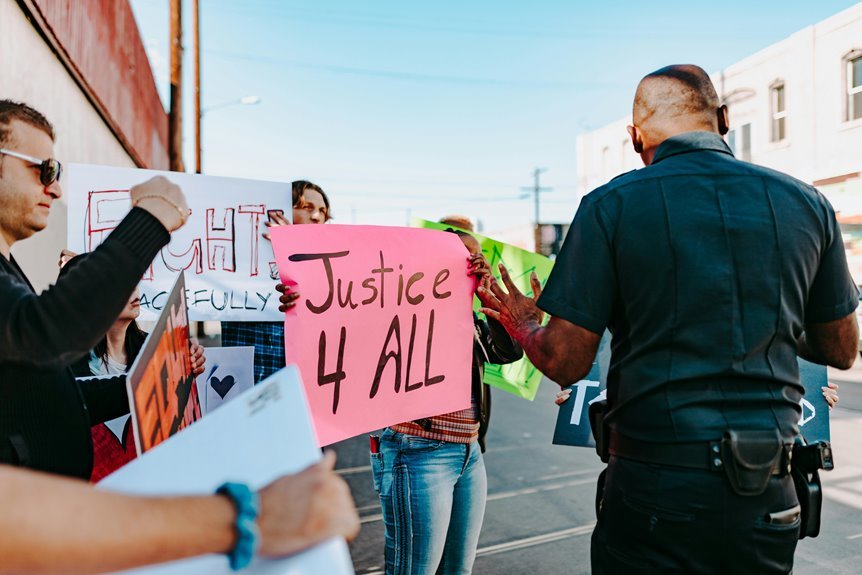
When a nation faces threats, balancing national security with individual freedoms becomes a complex challenge that requires careful consideration.
You navigate security dilemmas that often impose freedom limits. While protecting the state, you must ensure that essential rights aren’t sacrificed.
Striking this balance is crucial; safeguarding your liberties doesn’t undermine security, and fostering trust between government and citizens strengthens both freedom and safety in society.
Conclusion
In times of national crisis, Article 358 serves as a double-edged sword, ready to slice through the fabric of individual rights for the sake of security. Yet, as you navigate this tumultuous sea, remember that the lighthouse of democracy must shine brightly, guiding us back to the shores of accountability and freedom. The challenge lies in ensuring that, even in the storm, the ship of civil liberties remains afloat, protecting the essence of who we are.