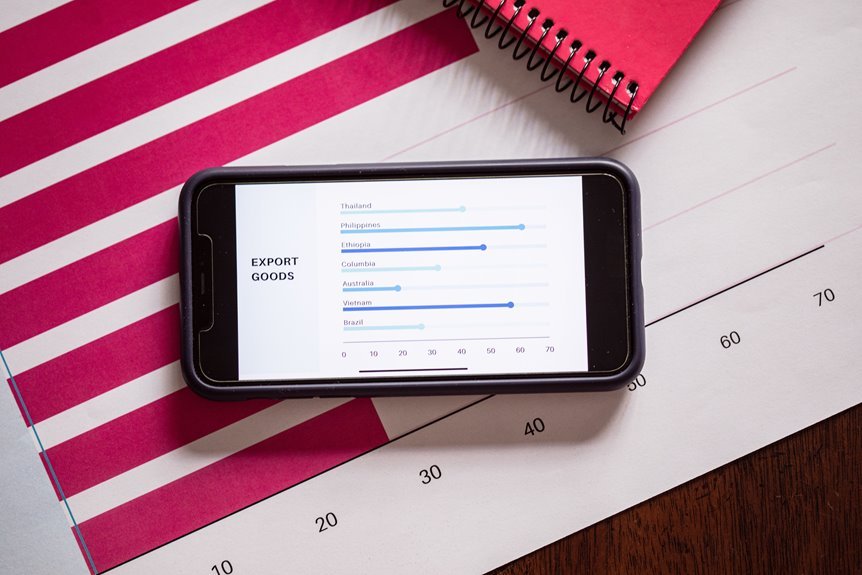
Global trade tensions are turning the economy upside down, affecting businesses and consumers alike. As the U.S. and China clash over tariffs and policies, you might wonder how these developments impact your daily life. With fluctuating currencies and rising prices, understanding the driving forces behind these tensions is crucial. What strategies can you implement to navigate this complex landscape effectively? The answers could redefine your approach to global commerce.
Main Players in U.S.-China Trade
In the complex landscape of U.S.-China trade, several key players drive the dynamics of this relationship.
You’ll find that China tariffs and U.S. policies significantly shape trade agreements.
The economic impact is vast, influencing market volatility and negotiation strategies.
Understanding these elements helps you grasp the intricate balance of power and interests that define this critical global trade partnership.
What Drives Global Trade Tensions?
While various factors contribute to global trade tensions, economic nationalism and protectionist policies often take center stage.
Currency fluctuations can destabilize trade relationships, affecting pricing and competitiveness.
Additionally, disruptions in the supply chain emerge from these tensions, leading to inefficiencies and increased costs.
Understanding these dynamics is crucial for navigating the complex landscape of international trade and maintaining economic freedom.
How Trade Tensions and Tariffs Impact Consumers and Businesses
Trade tensions and tariffs significantly affect both consumers and businesses, often leading to higher prices and reduced choices.
You’ll notice pricing changes as import costs rise, impacting consumer behavior and forcing businesses to adjust their strategies.
The supply chain faces disruptions, limiting market competition and creating export challenges.
Ultimately, these factors contribute to a broader economic impact, shaping the landscape for everyone involved.
How to Adapt to Current Trade Tensions
As businesses navigate the complexities of current trade tensions, adapting strategies becomes essential for maintaining competitiveness.
Focus on market diversification to reduce dependence on specific regions. Enhance your supply chain’s flexibility to withstand disruptions.
Employ effective negotiation tactics to secure favorable terms, and prioritize policy adaptation to align with shifting regulations.
Building economic resilience now will position you advantageously for future uncertainties.
Conclusion
In navigating global trade tensions, it’s crucial to recognize that tariffs imposed by the U.S. on Chinese goods have increased prices for consumers by an average of 3%. This statistic illustrates the tangible effects of these policies, emphasizing the need for businesses to adapt effectively. By understanding the complexities of trade dynamics, you can develop resilient strategies to mitigate risks and seize opportunities, ensuring your operations remain competitive in an uncertain market landscape.