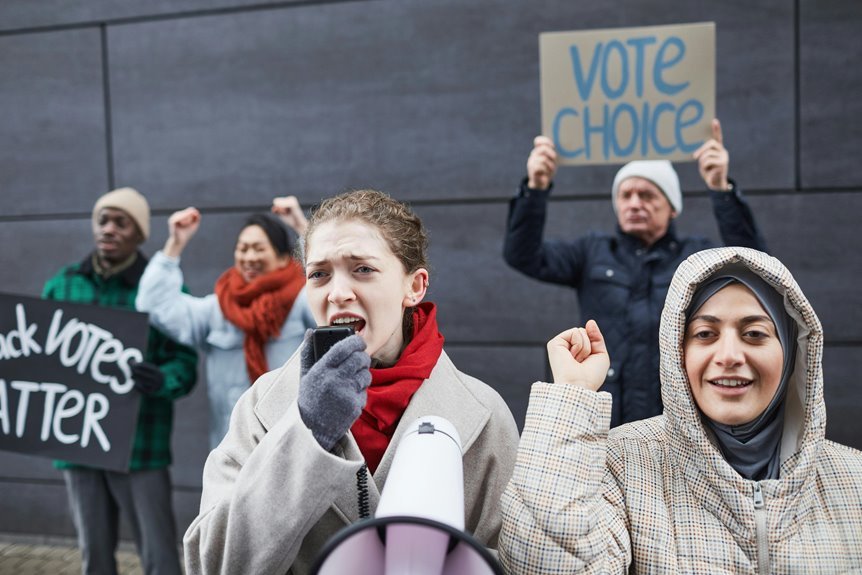
In 2020, the farmers’ protests in India sparked widespread hartals across the country, showcasing their role as a significant form of resistance. These organized strikes disrupt daily life to voice dissent and demand change. However, while hartals can unite communities, they also lead to socioeconomic challenges. Understanding the complexities of hartals raises important questions about their effectiveness and the broader implications for society. What drives people to embrace this form of protest?
Historical Context of Hartal
Hartal, a term derived from the Gujarati word “hartal,” which means to strike or close down, has deep roots in the socio-political landscape of South Asia.
Its political origins trace back to colonial resistance, where social movements utilized it as a powerful tool for dissent.
Mechanisms and Strategies of Hartal
Organizers employ various mechanisms and strategies to effectively execute a hartal, ensuring maximum participation and impact.
They utilize protest tactics like social media campaigns and grassroots outreach to mobilize support.
Coordinated messaging fosters unity, while establishing clear goals enhances focus.
Socioeconomic Impacts of Hartal
While often seen as a tool for political expression, hartals can significantly disrupt socioeconomic stability within a community.
You’ll notice that the economic consequences can be severe, leading to losses for businesses and workers alike.
Additionally, hartals can fuel social unrest, as frustrated citizens may feel increasingly marginalized.
This cycle of disruption can hinder progress and exacerbate existing inequalities within society.
Perspectives on the Efficacy of Hartal
The effectiveness of hartals as a political tool is a subject of ongoing debate among scholars, activists, and policymakers.
While some argue that hartals galvanize public opinion and advance political goals, others contend they disrupt daily life without achieving meaningful change.
Ultimately, the impact of hartals hinges on how they resonate with the public and whether they genuinely reflect collective aspirations for freedom and justice.
Conclusion
In conclusion, while hartals serve as a potent tool for expressing dissent, their impact on society is a double-edged sword. You might find that they unite communities in pursuit of change, yet they simultaneously disrupt daily life and economic stability. Like a fire that warms the home but can easily scorch the earth, the effectiveness of hartals depends on their context and execution. Balancing their advantages and drawbacks is crucial for understanding their role in political discourse.